


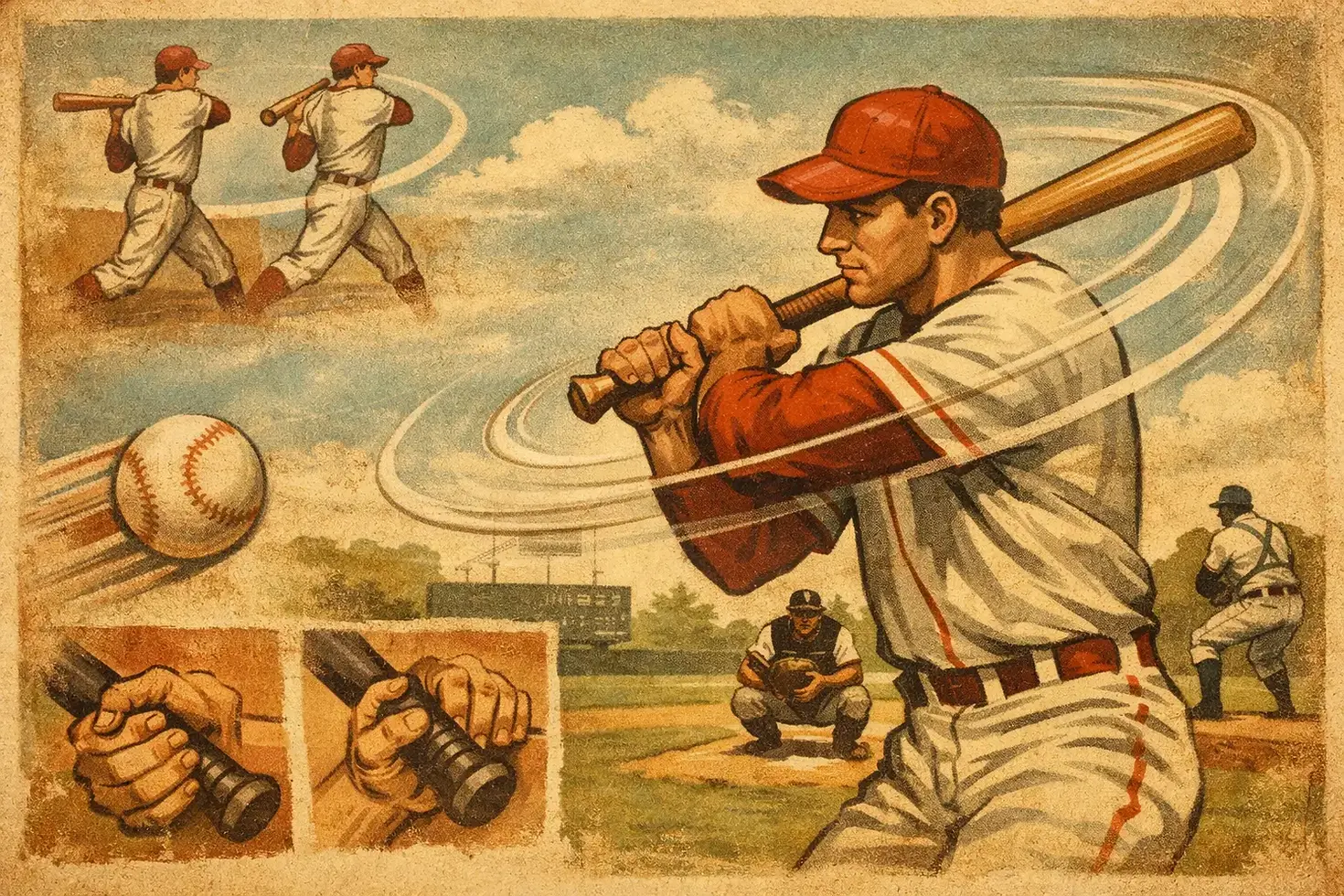
Baseball Hand Path Guide for Better Bat Speed
- Liane Ojito
- May 8
- 6 min read
Watch a hitter who gets beat by average velocity, and you will usually see the same thing before contact ever happens - the hands drift, the barrel gets long, and the swing spends too much time getting back on plane. A good baseball hand path guide starts there, because hand path is not a style point. It is the difference between being on time with adjustability or fighting your own swing in the box.
Hand path is the route your hands take from launch to contact and through extension. When that route is efficient, the barrel enters the zone sooner, stays through it longer, and gives the hitter more room for timing error. When it is inefficient, the swing gets big, the body has to compensate, and bat speed often shows up late instead of where it matters.
For serious players and coaches, the key is to stop treating hand path as an isolated hand drill. The hands do not move well unless the body gives them a clean job to do. Posture, turn, connection, and direction all shape the path. If one piece breaks down, the hands usually take the blame for a problem they did not create alone.
What good hand path actually looks like
A clean hand path is short without being rushed. The hitter works the knob and barrel into the zone with direct intent, but not by pushing the hands away from the body early. Good hitters create space with rotation, maintain connection through the turn, and let the barrel work behind the ball instead of casting around it.
That matters because the shortest path to the ball is not always the best path through the ball. Players hear "be short" and sometimes respond by chopping down or forcing the hands straight at contact. That can produce weak top-spin contact or a swing that cuts across the zone. Efficient hand path is compact, but it also matches the plane of the pitch and gives the barrel time in the hitting zone.
At contact, the hands are usually tight and organized, the lead arm has direction without locking too early, and the rear side is delivering the barrel instead of dumping it. You should see leverage, not reach. You should see turn, not drift.
The biggest hand path mistakes hitters make
Most bad hand path patterns come from a few repeat offenders. The first is early disconnection. When the back elbow flies away or the hands separate from the body too soon, the barrel gets long. That long path may still catch mistakes, but it struggles against velocity and movement.
The second is casting. This happens when the hitter throws the barrel toward the ball from the top instead of turning it into the zone. Casting often looks powerful in dry swings because the barrel moves fast early, but it costs adjustability and usually creates weak contact out front.
The third is hand drift during load or stride. If the hands leak back, wrap, or move without purpose, the swing starts from a poor launch position. Then the hitter has to reroute on the way forward. Good timing can hide that in batting practice. Game speed usually exposes it.
A fourth mistake is trying to fix everything with the hands alone. If the lower half drifts forward, posture rises, or the torso opens too early, the hands will often get forced into a bad route. Coaches who only cue the hands can miss the actual source of the problem.
A baseball hand path guide for building a shorter swing
If your goal is a shorter, faster, more repeatable move, start with setup and launch. The hands should begin in a position the hitter can repeat under pressure. That does not mean every player needs the same slot, but it does mean the hands cannot start so high, so wrapped, or so active that they create extra movement before the swing even starts.
From there, the hitter needs a clean load with minimal wasted motion. The hands can move, but they need to move with rhythm and purpose. A small move that helps timing is useful. A big move that has to be corrected is not. Players who feel "loose" in the box often mistake excess movement for athleticism. The best swings are usually simpler than they feel.
When the front side lands, the turn should help deliver the hands. That is where many hitters improve immediately. Instead of yanking the knob independently, think about turning the body in a way that allows the hands and barrel to work on time. The hands are not passengers, but they should not be acting alone either.
A strong cue is to keep the barrel from working around the ball too early. Let the turn create the path. If the hitter stays connected and rotates with posture, the barrel can enter the zone efficiently without getting pushed away from the body.
Why leverage changes hand path
Leverage is one of the most misunderstood parts of hitting mechanics. Players often chase bat speed by trying to swing harder with the hands. In reality, better leverage usually creates cleaner speed than harder effort. When the body turns well and the hands stay organized, the hitter can move the barrel with less waste.
That is why training tools matter only if they preserve the natural swing path. If a weighted implement changes how the hitter moves the barrel, the player may get stronger at a pattern that does not transfer well to the game. That is not useful development. The right training environment supports direction, connection, and barrel efficiency while still letting the athlete move with intent.
This is where coaches and players need to be selective. Some overloaded swings teach compensation instead of leverage. A better option is a tool that lets athletes train during tee work, soft toss, and batting practice without forcing a different hand path just to move the bat. Ritend Bat Weight was built around that principle, which is why it fits performance training better than generic weight solutions that can distort the move.
Drills that improve hand path without creating bad habits
The best hand path drills are simple, repeatable, and tied to real contact. Tee work is still one of the most effective ways to clean up the route of the hands because it slows the environment enough for the hitter to feel barrel entry and connection. Set the tee slightly deep and work on driving the ball with a tight turn. If the hitter has to cast to reach the ball, the setup will expose it immediately.
Soft toss is useful when the feeder understands the goal. Tosses that force the hitter to stay through the middle of the field can sharpen direction and keep the hands from pulling off. Front toss also helps if the player is advanced enough to adjust without abandoning mechanics. The point is not mindless swings. The point is repeated swings where the hitter can feel a compact path under realistic timing.
One of the best constraints is to train for line-drive contact with intent instead of trying to manufacture launch angle. Hitters who chase lift too early often lengthen the path and lose the barrel. If the hand path is clean, carry will come from flush contact and bat speed, not from scooping under the ball.
How coaches should evaluate hand path
Do not evaluate hand path only from one angle. From behind, you can often see whether the barrel enters cleanly or gets thrown around the ball. From the side, you can check posture, spacing, and whether the hitter is reaching instead of turning. Slow-motion video helps, but so does ball flight. The swing tells the truth, and so does the result.
Look for patterns. Does the hitter miss under velocity? Roll over inside pitches? Hook balls in front toss and then lose power in games? Those are usually not random outcomes. They often connect back to how the hands and barrel are getting to the zone.
Also remember that not every hitter needs the same feel. One player may need to feel tighter connection. Another may need better direction with the lead side. Another may need to calm down pre-swing hand movement. The standard is efficient barrel delivery, but the cue that gets there can vary.
What players should feel versus what they should do
Feel is useful, but only if it leads to a better move. Many hitters say they want their hands to be quick. That is fine, but quick is not the same as rushed. A better feel is often that the turn delivers the barrel while the hands stay tight and connected. Another helpful feel is letting the barrel work early enough to get on plane, but not so early that it loops.
The right feel should produce contact that is harder, more repeatable, and easier to adjust with. If a cue makes batting practice feel fast but game contact gets worse, that cue is probably feeding the wrong pattern. Trust what transfers.
Good hand path is not about making the swing look pretty. It is about giving the hitter a barrel that gets to the zone on time, stays there with authority, and holds up against real pitching. Build that path in controlled work, test it under speed, and keep the standard simple - if the move creates better leverage, cleaner contact, and more usable bat speed, you are on the right track.


Comments