


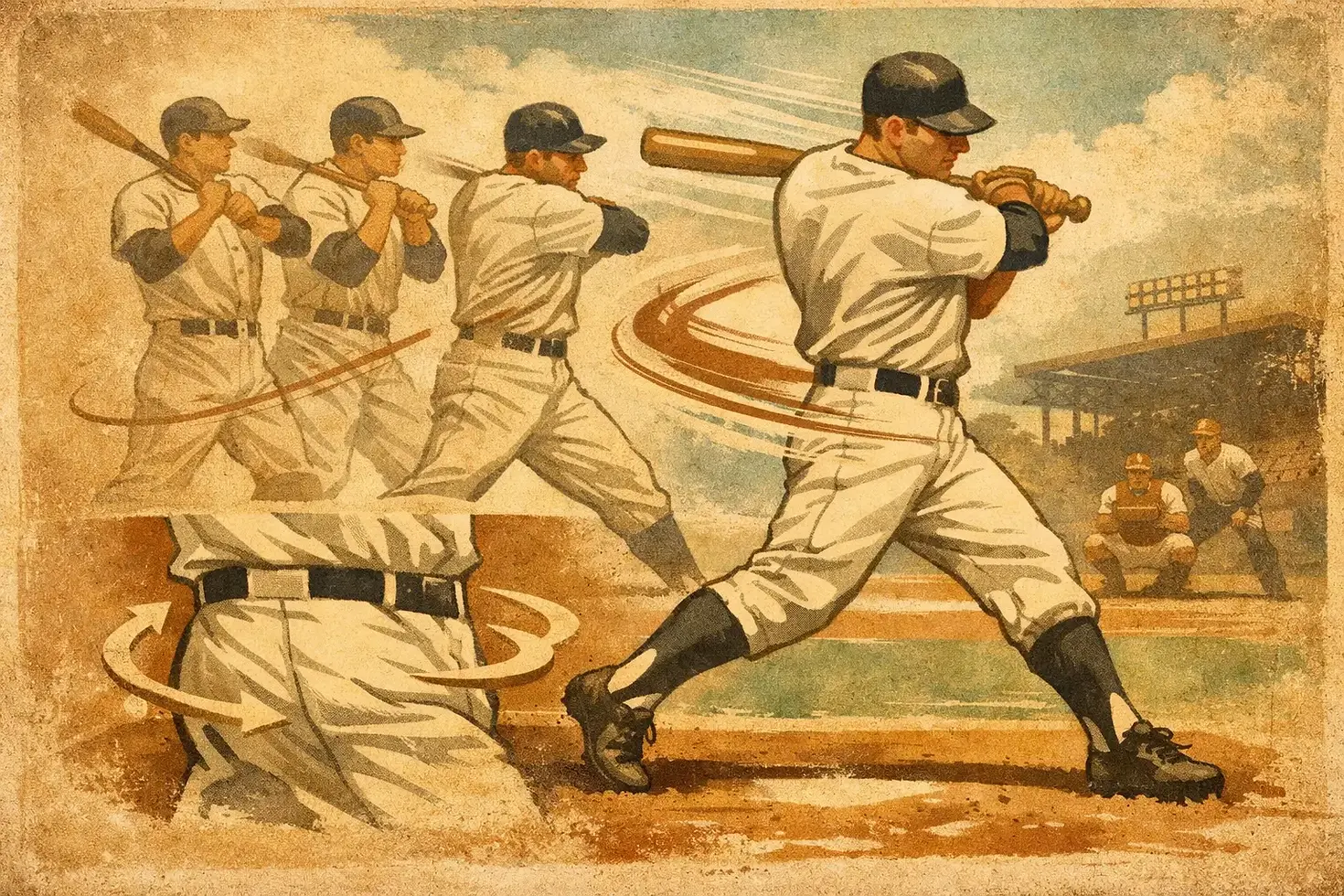
How to Sequence Hips for Faster Bat Speed
A hitter can look strong in the cage and still leave bat speed on the table because the lower half fires at the wrong time. Learning how to sequence hips is not about spinning harder or forcing a dramatic hip turn. It is about creating the right order of movement so the ground, legs, hips, torso, hands, and barrel work together.
For baseball and softball hitters, good hip sequence creates separation, better leverage, and a more efficient path to the ball. When the hips work too early, the upper body often leaks forward, the hands cast, and the barrel has to take the long way around. When the hips stay closed too long, the hitter can get trapped behind the pitch and lose adjustability. The goal is controlled rotation that starts from the ground and transfers energy into the swing.
What Hip Sequence Means in a Swing
Hip sequence is the timing of the pelvis during the swing. It begins with a stable move into the back leg, continues through the forward move and front-foot strike, then accelerates as the hitter turns the barrel into the zone.
The hips should begin to open before the shoulders fully commit. That difference in timing creates hip-to-shoulder separation. Think of the pelvis as the first major rotating segment and the torso as the segment that follows. The hands and barrel then respond to the body’s rotation rather than trying to create all the speed on their own.
That does not mean the hips race open as soon as the hitter starts forward. Early rotation is one of the most common sequence problems. A hitter who spins the hips before getting into the front side often pulls off the baseball, loses posture, and makes the bat path longer. Good sequence is not just about turning. It is about turning from a position of strength.
Start With a Load You Can Control
A clean sequence starts before the stride. During the load, the athlete should gather into the back leg without drifting excessively away from the pitcher. The back hip works into the rear leg, creating a stable base from which to move forward.
Players often hear “sit into the back hip,” then overdo it by sinking too low or collapsing the rear knee inward. That can make the move slow and restrict rotation. Instead, feel athletic pressure inside the back foot and rear glute. The pelvis should stay relatively level, the chest should remain stacked over the body, and the head should stay quiet enough to see the ball clearly.
For younger athletes, a simple cue works well: load like you are preparing to jump forward, not like you are sitting in a chair. The body needs tension and athleticism, not a deep squat.
How to Sequence Hips From Stride to Contact
The key moment is front-foot strike. As the front foot gets down, the hitter needs enough front-side stability to rotate around it. The lead leg does not have to lock out immediately, but it must begin accepting force. That gives the rear hip somewhere to work toward.
From there, the rear hip begins to turn while the torso remains connected and slightly behind the pelvis. The belt buckle starts opening, but the chest does not fly open with it. This is where separation is created.
A useful feeling is that the rear pocket is working toward the pitcher while the hands are still delivering the barrel from behind the body. The hitter is not pushing the pelvis forward. They are rotating it around a firm front side.
As the swing continues, the torso follows the hips, the back elbow works into the slot, and the hands stay connected to the turn. The barrel enters the zone with intent rather than being thrown from the shoulders. At contact, the hips are generally more open than the shoulders, and the chest is still capable of staying through the baseball or softball.
Exact positions will vary. A taller hitter, a player with a bigger stride, and a hitter facing high velocity may not look identical at contact. The principle remains the same: lower-half rotation starts the chain, upper-body rotation follows, and the barrel is delivered efficiently.
The Difference Between Rotating and Spinning
Spinning looks fast, but it rarely produces consistent hard contact. A spinner opens the front side early, lets the head drift, and often pulls the hands away from the body. The result is usually a steep, disconnected swing that has trouble handling pitches away or adjusting to off-speed.
Rotating means the hitter maintains posture while turning against the front leg. The lead hip clears enough to create room for the hands, but the hitter stays centered and connected. The rear hip continues forward and around, rather than sliding forward without rotation.
One easy checkpoint is the finish. If the hitter routinely falls toward the third-base side for a right-handed hitter or the first-base side for a left-handed hitter, they may be spinning off. If they finish balanced with the chest and eyes tracking the ball’s flight, their rotation is more likely organized.
Cues That Help Athletes Feel Better Hip Sequence
Mechanical cues should create a useful movement, not become permanent swing thoughts. Use one cue at a time during a drill, then let the athlete compete and react to the ball.
“Land, then turn” helps hitters who open before the front foot is stable. “Turn the rear pocket” is useful for athletes who slide their hips forward instead of rotating. “Keep the chest back as the hips go” can help create separation for players whose shoulders open at the same time as their pelvis.
For hitters who are stuck on the back leg, try “get into the front side, then rotate.” This is different from lunging. The hitter should move pressure forward under control, then use that front leg as a post for rotation.
Avoid telling every athlete to “squash the bug.” That cue can encourage a back-foot spin without a productive move into the front side. The back foot will release naturally as the rear hip turns, but it should be the result of force transfer, not the entire goal.
Drills to Train Hip Sequence
The best drills make the athlete feel the order of movement without taking away the intent to hit the ball hard. Start with slow, controlled repetitions, then progress to tee work, soft toss, and live batting practice.
Step-Behind Swings
The step-behind drill teaches athletes to gather momentum, move into the front side, and rotate in sequence. Begin with the feet close together. For a right-handed hitter, step back with the right foot, gather, then stride and swing. For a left-handed hitter, reverse the movement.
The focus is not a large step. The focus is feeling the body move forward before the hips and barrel fully fire. If the player spins during the drill, reduce the speed and shorten the move.
Walk-Through Tee Work
Set the ball on a tee at a location the hitter can handle without reaching. Take one or two controlled walking steps into the normal stance, land the front foot, and swing. This drill exposes early rotation quickly because the hitter must establish the front side before accelerating the barrel.
Use it for line drives through the middle of the field first. Pull-side intent can come later, once the hitter shows control of the sequence.
Pause-at-Landing Reps
Start in the normal stance and load as usual. Stride, pause briefly when the front foot lands, then complete the swing. The pause removes momentum and forces the athlete to feel whether they are truly balanced at landing.
During the pause, check that the head is stable, the front leg is beginning to accept pressure, and the shoulders have not already opened. Then allow the rear hip to initiate the turn.
Connection Work With Added Resistance
A knob-mounted training weight can be useful during controlled tee work and soft toss because it gives the hitter feedback on hand path and connection without changing the barrel’s natural route like a traditional donut-style weight can. The athlete still needs to sequence the lower half correctly. Added resistance will not fix an early-opening pelvis, but it can reinforce a connected turn when used with quality reps.
Keep resistance work purposeful. Use a manageable number of swings, maintain game-like posture, and remove the training tool periodically so the hitter can carry the same sequence into a normal bat.
Common Hip Sequence Errors and Fixes
If a hitter’s hips and shoulders open together, simplify the move. Use pause-at-landing reps and ask the athlete to feel the pelvis start first while the chest stays closed a fraction longer. Video from the open side can help, but do not chase perfect positions frame by frame. Look for a repeatable pattern that produces hard contact and adjustability.
If the hitter is sliding instead of turning, check the front leg. Many players push their rear hip toward the pitcher but never establish a firm lead side. Shorten the stride if necessary, get the front foot down under control, and cue the rear pocket to turn around the lead hip.
If the hitter is staying back too long, the issue may not be hip speed. They may be afraid to move pressure forward or may be using too much coil in the load. Train a smaller, more athletic gather and let the body move into the front side earlier.
Better hip sequence should show up in the ball flight. Look for more consistent contact, firmer line drives, improved ability to stay through pitches away, and less need to force the hands to create speed. Build it one quality rep at a time, then test it against real velocity where the sequence has to hold up.


header.all-comments